
A Story About Family
The Site of Paradise Springs Winery
The site of Paradise Springs Winery lies on 36 acres nestled in the quiet corner of Clifton, Virginia, on the southeastern edge of Fairfax County. The property borders Hemlock Regional Park, with Bull Run River flowing only steps through the woods.
Originally, the property was part of a one-thousand-acre land grant from Lord Fairfax in 1716 to the family’s direct ancestors and has been passed down through the generations since. Several hundred acres still remain in the family today.
The Original Cabin
The original log cabin is estimated to have been built between 1800 and 1825, as there is no record of the exact date. In 1955, Howard Richter, a protégé of the great Frank Lloyd Wright, led a major renovation of the cabin. Another wing was added to the original cabin that includes a kitchen, bathroom, plumbing, and electricity. The original foundation was reinforced and transformed into a cellar complete with a built-in wine rack.
Influences of Frank Lloyd Wright’s work can be seen throughout the renovation, including the indirect lighting, hidden spaces, intricate electrical switches, small entrances into large rooms, and the concept of bringing nature indoors. In 1956, a red barn that sat just off Main Street in downtown Fairfax was taken apart, the pieces were individually numbered, and it was reassembled piece by piece on the property.
The Founding of Paradise Springs Winery
More than 20 years ago, Jane and her aunt, the late Esther Kincheloe Podolnick, had a conversation about how the property would make the perfect backdrop for a winery. That conversation resonated throughout the years, and with the recent assent of the Virginia wine industry, the idea once again took off.
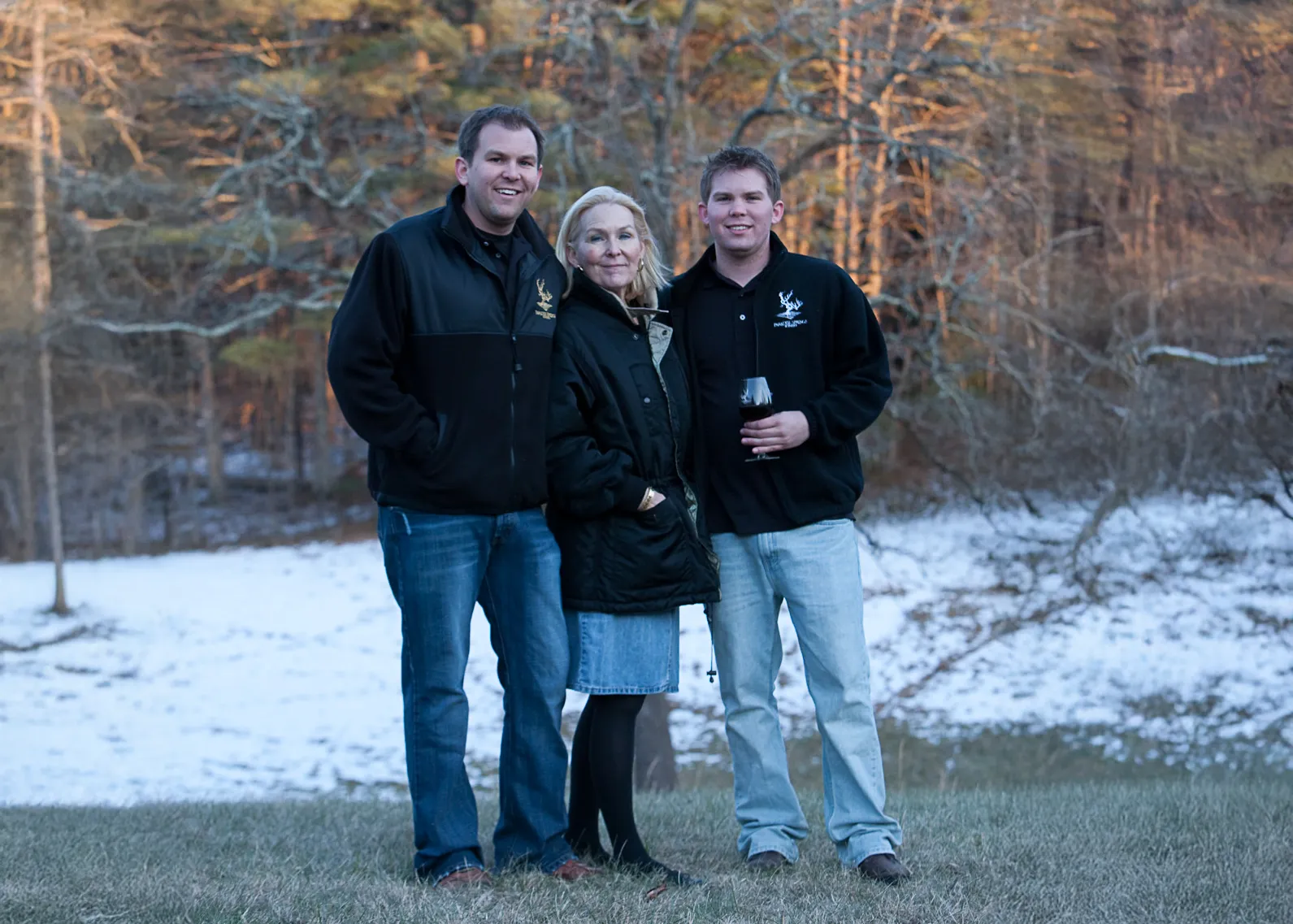
Jane’s eldest son, Kirk Wiles, recognized the opportunity and grabbed the reins on the project. After graduating from the University of Miami, Kirk moved back to Virginia in 2004 and started connecting the dots to put together what would be Fairfax County’s first and only winery.
In 2006, they met an acclaimed winegrower and vintner in Virginia who offered to serve as Consultant and Inaugural Winemaker to help guide them towards opening the winery. Armed with one of the most talented teams in the Virginia wine industry, Paradise Springs Winery was founded in 2007 as a family business, and their first vintage was crafted that fall: a Reserve Cabernet Sauvignon.
In April 2008, the first estate vineyard, comprised of Cabernet Franc, was planted on the west end of the property and has since seen exceptional growth due to the rich, fertile soils of the Occoquan Watershed.
The Legal Battle
The beginnings of Paradise Springs were not without its bumps in the road. In July 2008, Fairfax County officials informed Kirk that the winery would not be permitted on-site because, based on their interpretation of their own zoning ordinance, a Virginia Farm winery was not an agricultural use. They deemed it industrial/manufacturing, more suited for an industrial district. Since the regulations did not permit a vineyard to be planted in such a district, this effectively barred the existence of a Farm Winery throughout the entire county.
Not willing to go down without a fight, Kirk turned to Philip Carter Strother of Strother Law Offices in Richmond, VA to help right the ship. Philip, also a fellow Virginia winery owner, worked side by side with Kirk in and out of courts for the next year and a half.
On September 3rd, 2009, the Virginia ABC Board issued a decision that proclaimed Paradise Springs Winery’s right to operate and effectively issued their license. A few disgruntled neighbors appealed the decision, but it was ultimately upheld, and the winery opened its doors for business on January 16th, 2010.
Collaboration and Legacy
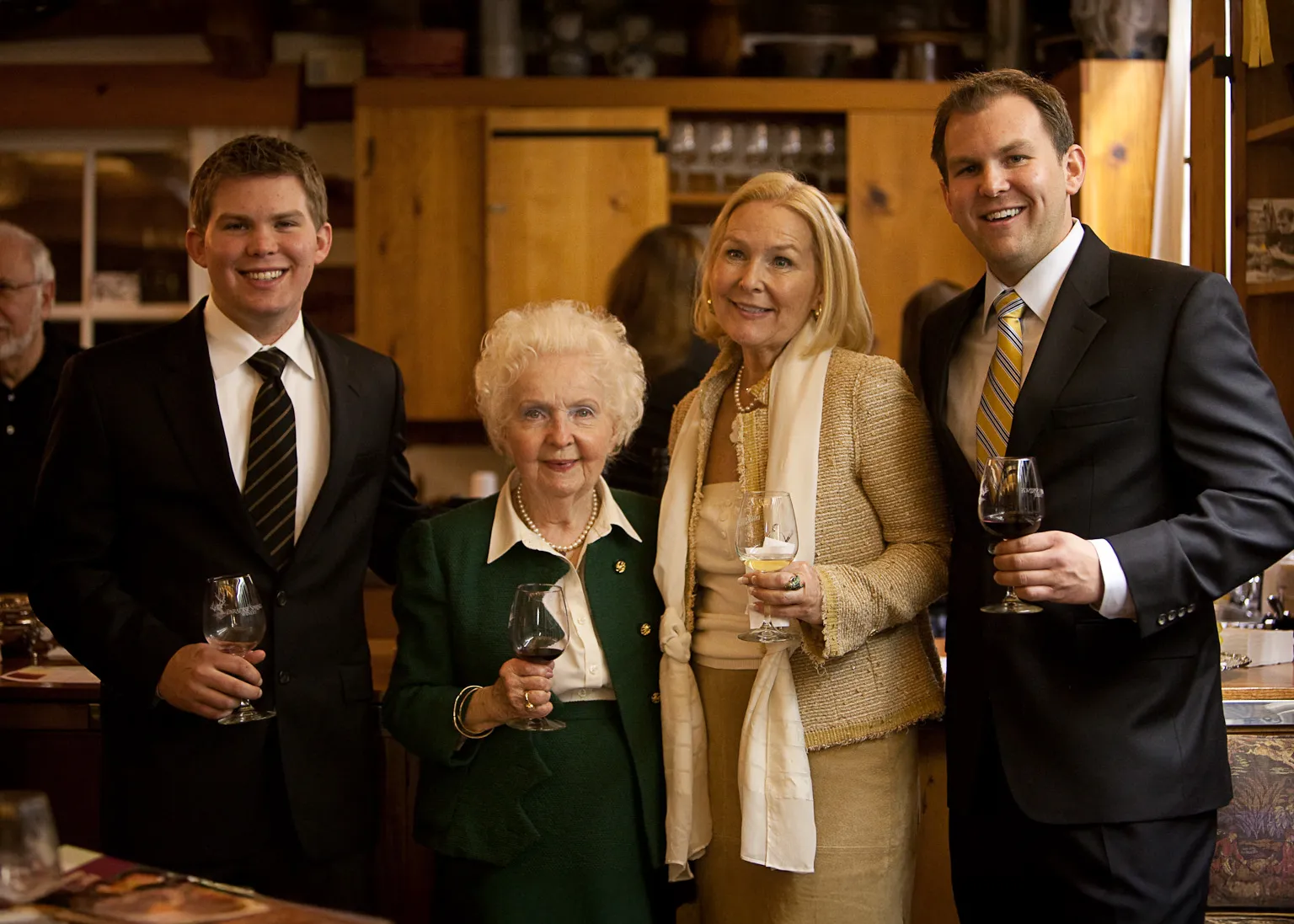
In a day and age where working together within the same industry almost never happens, Paradise Springs Winery is the product of a fellowship that the Virginia wine industry displays. By working hand in hand, they built a first-class winery closer to Washington, DC than ever before. A rare victory where agriculture has beaten development.
Today, the site remains one of the few historical gems left amongst the ever-expanding city sprawl of Northern Virginia and will continue to be a passed family relic for generations to come.

What’s in a Name?
The name Paradise Springs comes directly from the history books of Clifton, Virginia. Its origin was in the form of the mineral springs on the west side of town. Clifton was considered a resort destination by many in Washington, DC. We’ve had past Presidents and generals visit the town for its healing waters over the years.
In 1904, someone sent off some water from Paradise Springs to be tested; it was found to be pure enough for commercial bottling. In 1910, a bottling plant was constructed to start producing Paradise Springs bottled water.
The clear colored bottles displayed simply the word “PARADISE” blown into the glass. The Herald even once reported that Paradise Springs was “on the boom.” Nevertheless, the business eventually went under and became nothing more than a historical reference.
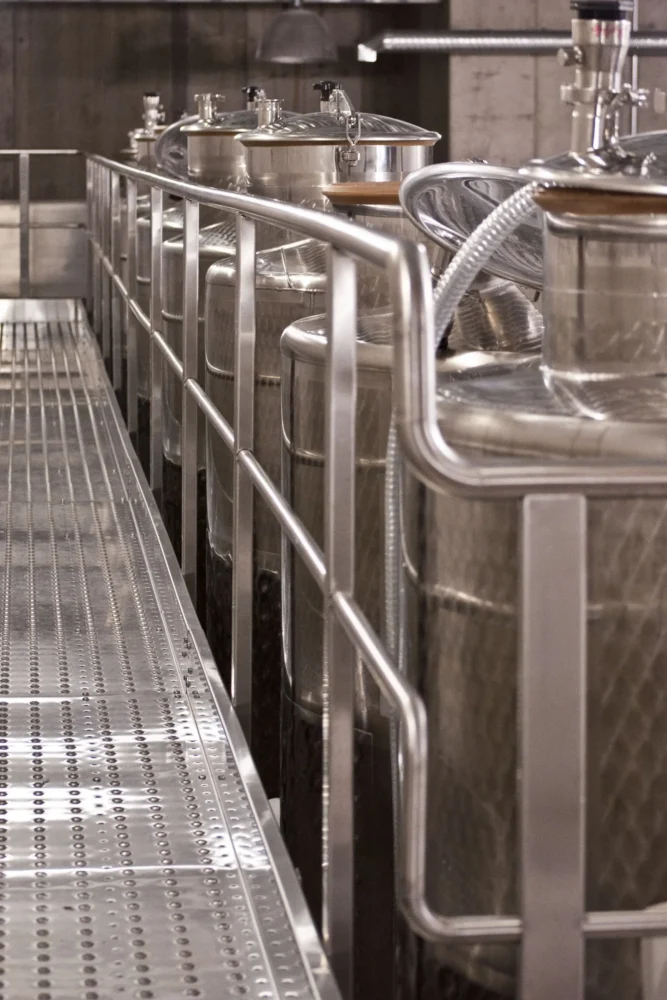
100 years later, we’re again bottling Paradise Springs, but in the form of wine. It’s a modern-day wine-to-water transformation! You can even see some of the original “PARADISE” water bottles on display at the winery.
History of Wine in Clifton
It’s said that the founding of Clifton lay in the aspiration to make great wine. One night, while returning from the Civil War, Harrison G. Otis passed through the town on the Orange and Alexandria railroad. It was while he was sticking his head out of the window to get some fresh air that he heard the squealing of hogs feeding on the profusion of wild grapes that were already growing in the area.
So in 1868, he returned and planted vineyards on the west side of town. Like Thomas Jefferson, his attempts failed as there was not enough technology at the time to allow Virginia wines to succeed. Even though his venture did not go as planned, Harrison went on to purchase the Deveraux Railroad Station (Clifton Station), develop the post office, build the town’s hotel, and become known as the founder of Clifton.
Clifton, Virginia
Clifton, Virginia: One of the final frontiers left in Northern Virginia. It’s a small town that has not developed much since its inception in the late 1800s. There are no traffic lights or direct postal service — just a couple of restaurants and pubs, a few shops, an ice cream stand, and a hundred-year-old general store. And you can often see horses riding through town.
Its façade is composed of houses that are almost all over one hundred and twenty years old. White picket fences line Main Street, while rustic lanterns and barrels full of flowers adorn the streets. And yet, within this quiet community lies a history that rests deep within this nation’s beginnings.
Originally known as Devereux Station, Clifton was born as a direct result of the Civil War. In 1861, the Union army incorporated the Orange and Alexandria Railroad Company into their military system. Clifton housed soldiers placed to guard against a Confederate invasion, making it the southernmost point of the Union army. Oftentimes, troops marched through town, fighting small battles and preparing to set up camp along the creek.
Once the war was over, Harrison G. Otis (commonly credited as being the founder of the town) helped to modernize the railroad, and in doing so, he purchased Devereux Station.
After failed attempts at cultivating grapes in his vineyard, Otis opened a hotel in the building that now serves as Trummer’s on Main restaurant. The town quickly became a retreat for the wealthy of Washington DC. Although its previous reputation preceded it as great hunting grounds (George Washington and Lord Fairfax used to hunt here), its new fame was the saloons, hot springs, and peaceful small-town pace.
Clifton became the first community in Fairfax to have power in 1925 with the coming of the Bull Run Power Company. The first high school in the county also started here, with students shuttled in by train. The Buckley store, built in 1900, was another major factor in the town’s growth. The store claimed to have “everything from a pin to a plow,” but it was later closed and converted into the Heart and Hand restaurant.
A few of Clifton’s most notable guests include actress Helen Hayes, who frequently summered here; Jeff Arch, who wrote his famous screenplay for Sleepless in Seattle in a house on Main Street; and many past presidents who came to dine at the fine eating establishments. Tourists also come to Clifton to enjoy the town throughout the year, visiting such events as Clifton Day, the Candlelight Homes Tour, and the Clifton Wine Festival.
Today, the Southern Railway caboose sits in town as a beautiful bright red landmark designating the spot of the original Devereux station. Aptly nicknamed the “Brigadoon of Virginia”, Clifton was declared a National Historic District by the U.S. Department of the Interior in 1985. In a world of continuous development, its charm remains intact and is worthy of a visit by all.
Go West
Paradise Springs Winery in Clifton, Virginia, was founded in 2007. After the 2013 harvest, CEO and Founder Kirk Wiles started exploring how Paradise Springs Winery could continue its unexpected quick growth in the wine world. Having grown from 1,300 cases to more than 12,000 cases a year in 2013, the demand for Paradise Springs wine was outpacing the quality fruit available in Virginia.
During a trip to California in February of 2014, Kirk found himself in Santa Barbara wine country exploring the region with a few lifelong friends. While falling in love with the Pinot Noirs of the region, it was on this trip that the answer came to him: Paradise Springs should start a second winery on the West Coast.
It was the perfect way to expand the brand without jeopardizing the high standards of quality he had set for the winery. Paradise Springs would be the first “bi-coastal” winery brand in the United States, standing for the highest quality of wine while achieving varietal correctness in a new region.
The winery was officially formed in the early summer of 2014, licensed by the state of California, and currently shares winemaking space with three wineries (including Margerum Wine Company) in Buellton, California. Doug was to act as Lead Consultant with his team performing the day-to-day work on the wine. Rob Cox, Head Winemaker at Paradise Springs Virginia, was to act as Executive Winemaker of Paradise Springs Santa Barbara with Kirk overseeing the entire operation. Together, the perfect team was formed.
With Pinot Noir from the Sta. Rita Hills as the star of the region, Kirk knew this was where the winery should concentrate winemaking efforts. Known as one of the greatest places in the New World to grow Pinot Noir, the Sta. Rita Hills AVA is closest to the ocean in Santa Barbara County. The combination of nutrient-deficient marine-based soils and the Pacific Ocean’s cooling influence of wind and fog through the only east-to-west mountain corridor on the west coast, form one of the best cool-climate viticulture areas for Pinot Noir to grow in the world.
The inaugural wines were produced that vintage year in 2014, a Sauvignon Blanc from Happy Canyon of Santa Barbara AVA and a Pinot Noir from Sta. Rita Hills AVA. These wines would add diversification to the already existing Paradise Springs portfolio while staying true to their mantra of producing exceptional wine of the highest quality.
Over the next year, Kirk and Rob flew back and forth from coast to coast, meeting with Doug, walking the vineyards, harvesting fruit, producing wines, blending barrels, and ultimately bottling the first wines on July 20th, 2015.
Kindred Spirits Find One Another
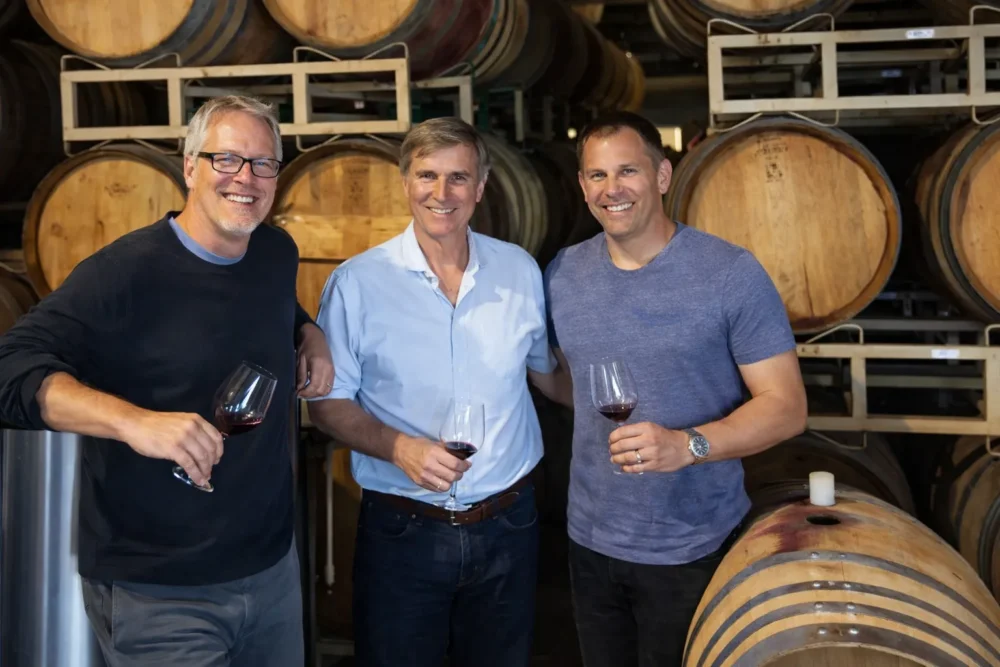
Kirk returned to Santa Barbara the following month with a few industry appointments setup by a mutual equipment supplier, Joe and Nikki Lutomski. His first appointment was with one of the region’s most well-known and respected winemakers, Greg Brewer. Kirk met Greg at Melville Winery, where Greg was the Head Winemaker at the time, and the two talked about the industry for a few hours. After the meeting, Kirk traveled over to Greg’s personal winery, Brewer-Clifton in Lompoc, California.
After tasting and talking with the staff at Brewer-Clifton, Kirk learned that there was a vineyard property, which had just come on the market within the Sta. Rita Hills AVA. The staff at the winery happened to know the real estate agent, and within the hour Kirk was out looking at the property.
While the site itself did not end up working out, the real estate agent was a man named Tom Davidson who had also helped to build some of the most well-known wineries in the area, including Sanford, Hilliard Bruce, and Seasmoke, to name a few. Tom and Kirk stayed in touch over the next couple of months, when finally a conversation they had about how Kirk wanted to start Paradise Springs Santa Barbara led to the introduction of Doug Margerum, one of the most well-respected individuals in the Santa Barbara wine region.
Doug, who grew up in Santa Barbara, was the owner of a longstanding, well-known restaurant downtown called The Wine Cask. He started his own winery, Margerum Wine Company, in 2001, just on the edge of the Sta. Rita Hills AVA in Buellton, California. Margerum had consistently produced some of the best wines coming out of the Santa Barbara region, constantly achieving wine scores from critics in the mid 90’s.
After many conversations between Kirk and Doug about the wine industry, winemaking philosophy, and life in general, the synergy between the two seemed to be the perfect fit. Kirk’s intuition was that this was the right partnership to launch Paradise Springs Santa Barbara.
Paradise Springs Santa Barbara officially opened in December 2017. Future vintages will see not only the continuation of the Happy Canyon Sauvignon Blanc and Sta. Rita Hills Pinot Noir but the addition of a Sta. Rita Hills Chardonnay, a Bordeaux blend from Happy Canyon, a Syrah, and a single vineyard Pinot Noir from the oldest and most esteemed vineyard in Santa Barbara County; Sanford and Benedict in Sta. Rita Hills.
As Paradise Springs Santa Barbara flourishes, operations in Virginia continue to push the boundaries on producing the best Virginia wine. The team is looking forward to new opportunities that will be created by bringing the Paradise Springs brand west.
“The First Bi-Coastal Winery Brand in the Country. From East to West.”
Join Our Mailing List
Subscribe to our newsletter and get access to the latest wine releases, events,
and promotions. You don’t want to miss out!